Herodotus
Today I want to remember a great guy.
If I say “Herodotus,” maybe you picture a boring old man, surrounded by scrolls, bald on top with long hair dangling over his ears, mumbling in Ancient Greek.
Let’s try to change that image.
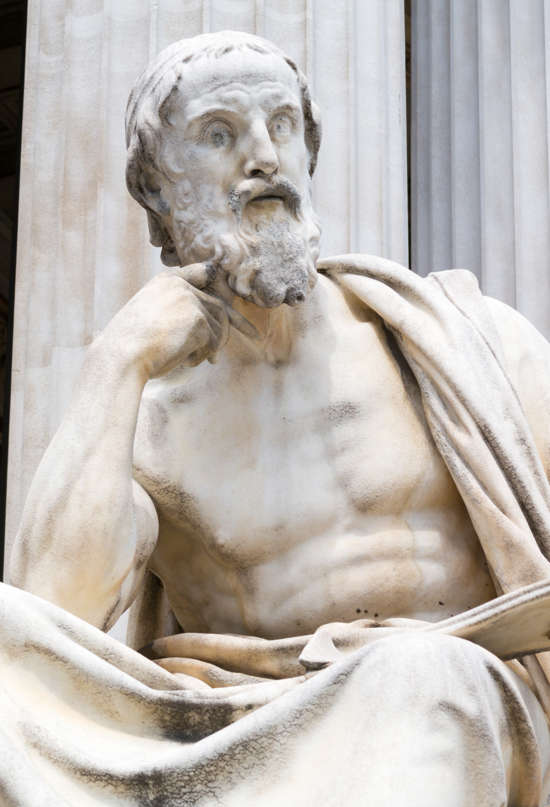
Maybe he was not so bald
Think of a trip today: Ryanair boarding passes, the epic struggle to fit all your clothes into a cabin backpack, knees jammed against the seat in front, delays if you take one of the last flights of the day, the car rental guy insisting on “mandatory” extras…
Ten hours of shifting your backside from one seat to another just to get from one European city to another. A long, exhausting day.
And that’s without even counting the language barrier. Last year, north of the Pyrenees, trying to pay at a campsite:
English?
Nope.
Spanish?
Nope.
The border is 10 km away and you work in a tourist business…
Pardon?
Nada. Ehh… je sui pagaré le camp?
…
Money per le stationaire aquí per je por 5 dais?
:-|
– The bill!
– Ah! La adició
Travel today can be a stressful, exhausting adventure.
Now imagine traveling twenty-five centuries ago. Could Greek have played a role as widespread as English does today? Herodotus was undoubtedly a brilliant mind, quick to learn languages, but even so, communication in that fragmented, ancient world must have been a constant challenge
Think about transport. Think about languages. Think about how “difficult” meant something entirely different. When Herodotus set out to explore the world, communication was slow, fragmented, and unpredictable.
Today, our “challenges” might be as trivial as finding a public bathroom—a surprisingly epic quest in some cities. You drink a coffee, nature calls, but the bathroom is nowhere to be found. So you grab another coffee to ask again, and suddenly you’re trapped in a vicious caffeine loop (yes, that’s the voice of an old man speaking).
But 2,500 years ago, the stakes were so much higher: unsafe paths, wild animals, hostile strangers, diseases… How the hell did these people find potable water in places without natural springs?
A quick rewind through literature
8th century BCE – Homer kicks off literature with the adventures of Odysseus (or Ulysses, for the Romans) in The Odyssey.
Before writing, humans passed knowledge by singing stories. These were in verse for a practical reason: if you changed a word, the rhyme broke, so mistakes were easy to catch.
So when Homer began to write… he wrote in verse. Then Hesiod and Sappho continued and refined the art of poetry (easy to summarize three hundred years in two lines). It’s hard to imagine the details of that everyday world, but writing was clearly an exclusive, almost sacred skill.
When Herodotus wrote his Histories around 440 BCE, he was doing something radically new: recording eyewitness accounts while mixing geography, anthropology, and storytelling. He built a bridge between oral tradition and systematic written history. His work stands almost alone in his generation: a long-form prose masterpiece meant to preserve human memory. In doing so, he effectively discovered prose narrative, pioneered travel writing, and even shifted the meaning of the word history from “inquiry” to the study of past events.
One minute to take all this in.
Notebooks and pens… ancient style
30,000–10,000 BCE – Humans scribbled on cave walls and stone.
9000–4000 BCE – Clay tokens for accounting.
3500 BCE – Clay tablets. Sumerians pressed wedge marks with a reed stylus — cuneiform. Durable, but your backpack limit was about three tablets.
3000 BCE – Papyrus. Now we’re talking. Made from the papyrus plant, it became the main writing support for Egypt and many Mediterranean cities for over two millennia.
And that’s basically it for 2,500 years, with a few variations: waxed wooden boards, leather scrolls, and later parchment (from Pergamon — hence the name).
Papyrus: the infinity in a reed
Thanks Irene Vallejo, for your wonderfull book. Trully inspirational. -https://es.wikipedia.org/wiki/El_infinito_en_un_junco-
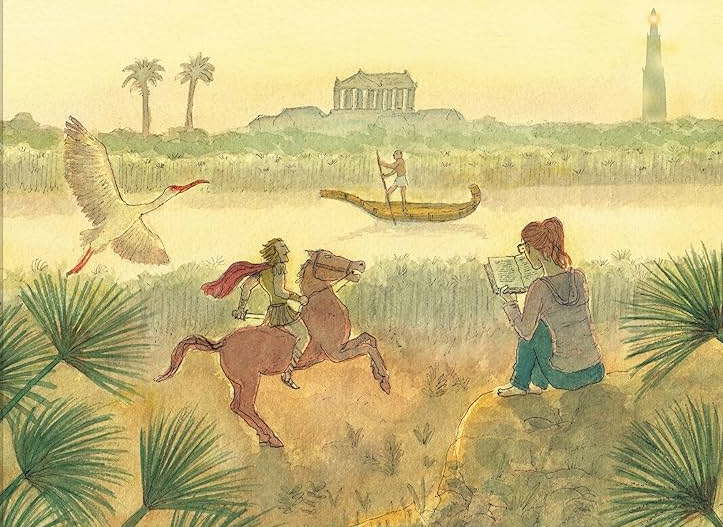
After millions of years of evolution, humanity finally invented the time machine. Not DeLorean-style, but even better: a magic surface where all of humanity could fit — real or imagined. Love, war, nature, art, gossip, the rise and fall of empires… all pressed into delicate sheets made from a humble swamp plant.
Papyrus was the backbone of literature for millennia. But oh, it came with some quirks.
Fragility and climate. Papyrus loved the Egyptian desert (dry, warm, basically the perfect spa). But take it to a humid climate and — poof! — mold, rot, insects, goodbye history. That’s why Egyptians became the librarians of the ancient world. To preserve it, people kept papyrus scrolls in boxes, tubes, or wrapped carefully like sushi.
Now imagine Herodotus on the road, lugging his scrolls across the Mediterranean. Not exactly hand luggage. Each roll had to be protected, packed, unrolled, rerolled… probably needing a servant just to babysit the “library.” One splash of rain and — gone! months of work dissolved into pulp.
Let’s be honest: not quite as handy as an iPad or a Moleskine notebook. But without papyrus, no stories would’ve made it across centuries. And so, infinity really did fit inside a reed.
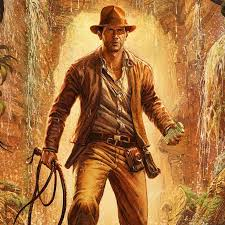
Herodotus nowadays?
Humans have an extraordinary talent for shaping stories and impressions in our minds. Perhaps this man deserves to be remembered not as a dusty relic or a tired old scholar, but as a daring adventurer and pioneer.