Focus on Power First
This blog has one unconditional subscriber who reads every post: my wife (love u darling).
The other day, trying to survive yet another infinite and tedious office day, I sent her a draft before any revision. Her opinion: “Your draft sucks. You combine advanced phrases with kid errors.”
If you had read the writing of my B2 exam…
She speaks English fluently and sometimes we debate about my objective. She tries to convince me that I must put effort into correcting mistakes and try to sound like a native speaker. I totally disagree. My objectives are:
Understand native speakers without misunderstandings.
Not sweat when I need to speak English. Speak clearly and confidently. Preferably without errors but, honestly, that’s a secondary goal. Nobody really cares about little mistakes when talking to a foreign speaker. And since the birth of ChatGPT, you can send a text to any AI agent, ask for a grammar check, and the result is simply awesome. (Seriously, I don’t understand how newspapers still have typos)
So, I’m applying the same approach Rafa Nadal used to win his first US Open — one of the most impressive lessons I’ve ever seen in sports
How Rafa Changed Everything to Win His First US Open
Rafa Nadal doesn’t need an introduction. One of the greatest sportsmen ever, admired worldwide for his values and sportsmanship. While Roger Federer represented perfection, Rafa was the fight and the “never give up” spirit. The guy who always finds a way to win.
Being left-handed and hitting with heavy topspin gave him a huge advantage on slow surfaces like clay. His opponents usually had to hit the ball backhand over his head — just look at his incomparable records at Roland Garros and other clay tournaments.
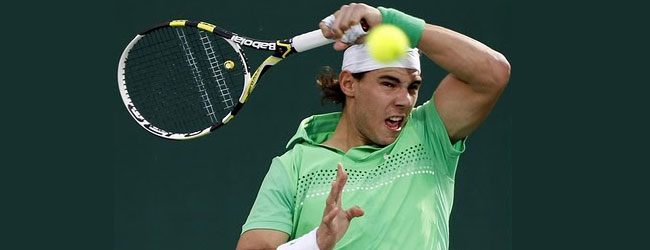
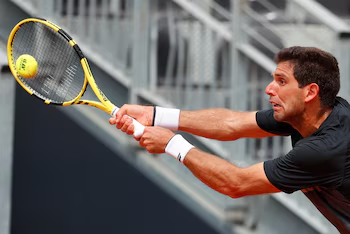
But that advantage disappeared on faster surfaces like hard courts, where he needed truly epic battles to win.
But something happened in 2010.
After a 2009 season plagued by injuries, Nadal came back strong in 2010. Among other important titles, he won Roland Garros again and claimed his second Wimbledon crown, beating Tomás Berdych in straight sets.
Still, his body was beginning to feel the overload of matches. He needed something new. Then the US Open began.
I always say that everything has its trick. What seems difficult to those who don’t know is easy to those who do. I love people who apply this principle. Like Rafa:
“I’ve played too many matches this year. I can’t keep surviving long rallies.”
…
“So, I’ll just serve at 130 mph and play faster.”
And just like that, in fifteen days, Rafa went from having one of the slowest serves in the elite to one of the fastest and most effective.
Focus on Power First (Golf Analogy)
Very much like in golf, Nadal prioritized hitting hard first — building raw force and muscle memory for speed.
Once he could hit the ball that hard consistently, he started working on placing the serve in the box with reliability.
This “power first, precision later” approach is common in motor learning: expand the range, then refine control within it.
A well-known method with an impressive result in a very short period of time
And it worked. At the 2010 US Open he won 95% of his service games, with 83.6% points won on first serve.
Later, he returned to a slower, more tactical serve to protect his shoulder and base his matches again on long rallies. But not before delivering one of the most impressive lessons of resilience and adaptation in sports.
My trick
This is exactly what I’m doing here: First, write a lot. Then, write well.
(And if my wife says that my drafts sucks, I’ll tell her I’m just serving at 130 mph for now. The precision will come later)